


10 Best Things to Do in Jordan – A Local Guide

Jordan is a small country, but you can see a lot in a short trip.
In one day, you can walk through the old streets of Amman and eat falafel for breakfast. A few hours later, you can be standing among Roman ruins in Jerash. Travel south and the scenery changes completely, from the red sandstone of Wadi Rum to the salty waters of the Dead Sea.
Then there is Petra, which deserves much more than a quick stop for a photograph.
The best things to do in Jordan are not all about famous monuments. Petra is about walking through an ancient city carved into rock. Wadi Rum is about desert landscapes, Bedouin hospitality and a night under the stars. Wadi Mujib is for an active day in the water, while Amman is best experienced through its old streets, food markets, cafés and historic hills.
If this is your first visit, these are 10 things to do in Jordan that are worth putting on your itinerary.
1. Walk Through Petra and See the Treasury
Petra is the place most visitors associate with Jordan, and it is easy to understand why.
The ancient Nabataean city was built in southern Jordan more than 2,000 years ago. It became an important trading centre, with caravans carrying incense, spices, silk and other goods passing through the region. Petra is now a UNESCO World Heritage Site and one of the New Seven Wonders of the World.
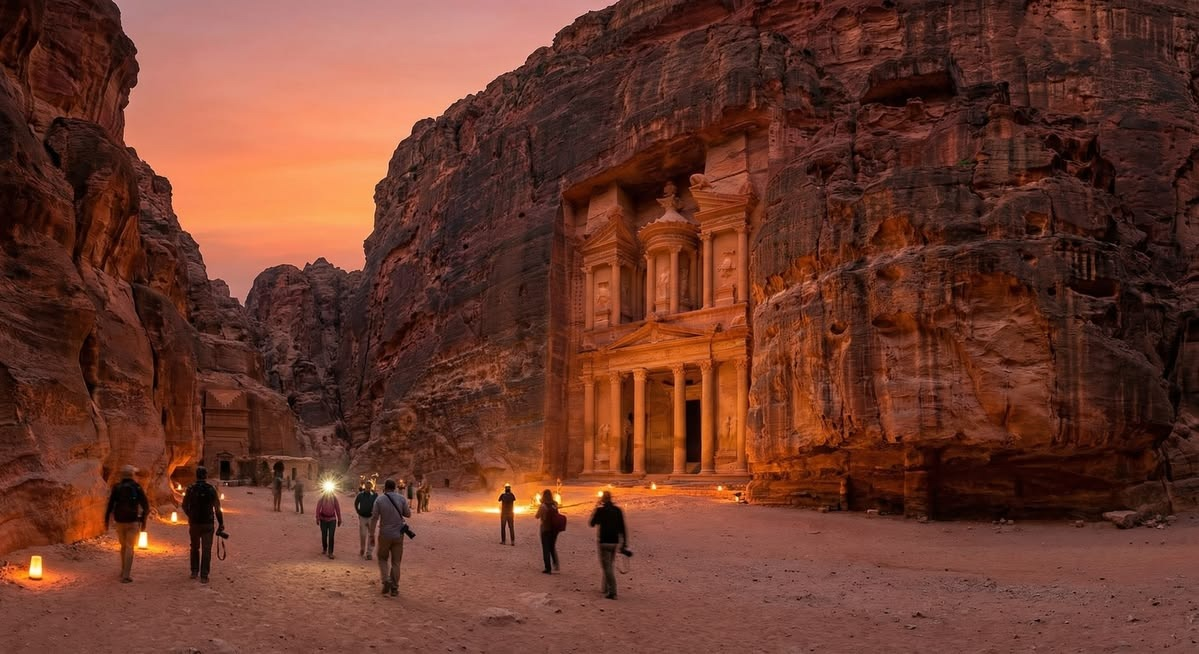
The visit starts at the Petra Visitor Centre. From there, you walk towards the Siq, a narrow natural gorge with tall sandstone walls. The walk through the Siq is part of the experience. Then, almost without warning, the Treasury appears at the end of the canyon.
This is usually the photograph people come to Petra for, but don't stop there.
The main trail continues beyond the Treasury towards the Street of Facades, Royal Tombs, Colonnaded Street and Qasr Al-Bint. The official Petra tourism information says the walk from the Visitor Centre to the Treasury can take up to about an hour, depending on your pace.
If you have more time and reasonable fitness, consider walking to the Monastery. It involves a long climb, but the building at the top is one of Petra's most impressive sights.
Another option is the Al-Khubtha route, which leads to a viewpoint overlooking the Treasury. This is a much harder hike and takes considerably longer than the main route.
How much time should you spend in Petra?
Give Petra at least one full day. Two days are better if you want to see the main monuments without rushing and take on one of the longer trails.
Wear comfortable walking shoes and carry water. Petra is much larger than the Treasury area seen in most photographs.
2. Spend a Night in Wadi Rum
A few hours after leaving Petra, the landscape changes dramatically.
Wadi Rum is a vast desert area in southern Jordan, known for its sandstone and granite mountains, narrow valleys and wide open spaces. The area is also a UNESCO World Heritage Site and is home to Bedouin communities.
One of the best ways to experience Wadi Rum is to stay overnight rather than visit only for a few hours.
Most visitors arrive at Wadi Rum Village and join a 4x4 jeep tour. These trips take you through parts of the desert, stopping at rock formations, viewpoints, inscriptions and other sites.
The experience is very different from Petra. There are no crowded streets of monuments here. You spend much of the day moving between huge rock formations and open desert.
Then comes sunset.
As the sun drops behind the sandstone mountains, the colour of the desert changes. After dark, the lack of city lights makes the night sky one of the main attractions.
Many camps also serve traditional Bedouin-style meals, and some prepare zarb, in which meat and vegetables are cooked underground.
Should you stay in a Wadi Rum camp?
Yes, if your schedule allows it.
You can choose between simple Bedouin-style camps and more comfortable camps with private rooms and larger facilities. The important thing is to check exactly what is included in your booking, especially transport, meals and jeep tours.
Wadi Rum also offers activities such as camel rides, hiking, climbing and stargazing.
For a first trip to Jordan, one night in Wadi Rum is usually enough to get a good feel for the desert.
3. Float in the Dead Sea
The Dead Sea is one of the easiest places in Jordan to recognize.
The water is extremely salty, which makes floating much easier than swimming in a normal sea. Jordan's Dead Sea coast is also known for mineral-rich mud and a large number of hotels, resorts and spa facilities.
The first thing most visitors do is step into the water and lie back.
You don't need to swim. In fact, swimming normally is not really the point. The high salt concentration makes the water highly buoyant, so you can simply float on your back.
The black Dead Sea mud is another popular part of the experience. Many visitors apply it to their skin, let it dry and then wash it off in the water.
If you are staying overnight, the resort areas make it easy to combine the Dead Sea with a spa visit, swimming pools and a quiet evening by the water.
A few practical tips
Don't shave immediately before visiting the Dead Sea. Salt water can sting cuts and irritated skin.
Also, avoid getting the water in your eyes. If it happens, rinse them with fresh water.
If you are visiting during a hot part of the year, an early morning or late afternoon visit is more comfortable than spending the middle of the day outside.
The Dead Sea is also close enough to Amman to work as a day trip, although staying overnight gives you more time to enjoy the resort area.
4. Hike Through Wadi Mujib
If Petra is Jordan's big historical experience, Wadi Mujib is one of its best outdoor adventures.
The Mujib Biosphere Reserve is located beside the Dead Sea. The Wadi Mujib gorge reaches the Dead Sea at around 410 metres below sea level, making the reserve the lowest nature reserve in the world. It also contains a wide range of plants and wildlife.
The Siq Trail is the attraction most visitors know.
Instead of walking along a dry trail, you move through water between the sandstone canyon walls. Depending on water levels and weather conditions, parts of the route involve wading, swimming and climbing near waterfalls.
That makes Wadi Mujib very different from most sightseeing trips in Jordan.
You should be reasonably comfortable in water and prepared to get wet. Good footwear with a secure grip is useful, and valuables that cannot get wet should be left behind.
When can you visit Wadi Mujib?
This is one place where you should check conditions before travelling.
The Siq Trail is seasonal and depends on weather and water conditions. Jordan's official tourism information specifically advises visitors to check availability with the service provider.
Do not assume that a trail shown in an old travel video will be open on the day you arrive.
For a trip that includes Wadi Mujib, check the latest conditions before leaving Amman or the Dead Sea area.
5. Explore Downtown Amman
Amman is not a city you should rush through.
The capital sits across a series of hills, and the older parts of the city feel very different from modern West Amman. Downtown is where you will find busy streets, traditional shops, food stalls, markets and some of the city's most important historic sites.
Start with the Roman Theatre.
Built in the 2nd century AD, the theatre was carved into the hillside and could accommodate around 6,000 people. It remains one of the most recognizable historic structures in central Amman.
From there, walk through the surrounding downtown streets and markets.
You can browse shops selling spices, sweets, clothing and souvenirs, or stop for a simple meal.
Then head up to the Citadel, known locally as Jabal Al-Qal'a. From the hill, you can look across the old centre of Amman and see how closely the city's newer buildings sit beside its ancient sites.
The Citadel includes the Umayyad Palace complex, Temple of Hercules and Byzantine Church.
Don't leave Amman without trying local food
Downtown is one of the easiest places to start.
A plate of hummus with falafel and fresh bread is a simple meal, but it is also one of the best ways to experience everyday food in the city.
Save some room for knafeh afterwards.
6. Walk Along Rainbow Street in Jabal Amman
Rainbow Street gives you a different side of Amman.
The street is one of the city's oldest and is lined with cafés, restaurants, shops and art spaces. It has become a popular meeting place for both local residents and visitors.
You don't need a strict plan here.
Walk along the street, stop for coffee, look into small shops and take your time.
The surrounding Jabal Amman area is also worth exploring. You will find older houses, steep streets and views towards other parts of the city.
For food, you can find everything from traditional Jordanian dishes to modern cafés and international restaurants.
If you visit during a period when Souq Jara is operating, it is another option to look for. The seasonal market in Jabal Amman has featured local products, food stalls, cafés and live performances.
Rainbow Street works particularly well in the late afternoon and evening, when the weather is cooler and the cafés begin filling up.
7. Spend an Afternoon in Jabal Al-Weibdeh
Jabal Al-Weibdeh is one of the best areas to visit if you want to see Amman's creative side.
The neighborhood is known for galleries, cafés, local shops and older residential streets. Jordan's tourism information also highlights the area for its art galleries and local character.
The National Gallery of Fine Arts is here, along with other cultural spaces.
Darat Al-Funun is another interesting stop. The site combines contemporary art exhibitions with older houses, gardens and views over downtown Amman.
What makes Weibdeh enjoyable is that you don't have to spend the entire afternoon inside attractions.
Walk the streets.
Look at the old stone houses.
Stop at a café.
Visit a gallery if something catches your attention.
It is also close enough to downtown to combine with a visit to the Roman Theatre, Citadel and old markets on the same day.
If you are staying in Amman for several days, don't treat the city as just a base for Petra and the Dead Sea. Spend some time actually walking around its neighborhoods.
8. Take a Day Trip to Jerash
About 45 kilometres north of Amman, Jerash is one of Jordan's most important archaeological sites.
The ancient city was known as Gerasa during the Roman period and became one of the cities of the Decapolis. Today, it is regarded as one of the best-preserved Roman provincial cities in the world.
The scale of Jerash is what makes the visit memorable.
You can walk along the ancient Cardo Maximus, a long colonnaded street that still has its original paving stones in places. The city also contains theatres, temples, plazas, fountains and other Roman structures.
The Oval Plaza is another major highlight. Its large open space surrounded by columns is one of the most recognizable parts of the archaeological site.
Don't rush through Jerash in 30 minutes.
The site is large, and walking through it gives you a much better sense of how the ancient city was laid out.
Jerash is also easy to combine with other northern Jordan destinations, including Ajloun.
The drive from Amman is relatively straightforward, with the official tourism site giving a journey of around 40 minutes at a leisurely pace.
9. Visit Ajloun Castle and the Northern Forests
Northern Jordan looks very different from Wadi Rum.
Around Ajloun, the landscape becomes greener, particularly during spring. The area is known for its forests, hills and agricultural land.
The main historic attraction is Ajloun Castle, also known as Qal'at Ar-Rabad.
The castle was first built in 1184 by one of Saladin's generals and was expanded in the early 13th century. Its position on a hill gave it an important defensive role and allowed it to watch the surrounding area and trade routes.
Walking through the castle gives you a good idea of why the location was chosen.
After visiting the castle, head into the surrounding countryside.
The Ajloun Forest Reserve covers about 13 square kilometres and has wooded hills and walking trails. Spring is particularly attractive, when wildflowers appear across the landscape.
This is a good choice if you have already spent several days around Amman, Petra and the desert and want a quieter day outdoors.
Ajloun is about 70 kilometres from Amman, so it can be visited as a day trip, although combining it with Jerash makes better use of the drive north.
10. Eat Your Way Through Jordan
You can visit all the famous archaeological sites in Jordan and still miss one of the country's best experiences if you don't spend enough time eating.
Jordanian food is closely connected to family, hospitality and everyday life.
Start with mansaf, widely regarded as Jordan's national dish. It is traditionally made with lamb, rice and jameed, a fermented dried-yogurt product used to make the sauce.
Then try falafel and hummus.
These are easy to find in Amman, particularly around downtown, and make a good breakfast or quick lunch.
Shawarma is another everyday favourite.
For something sweeter, order knafeh. The dessert combines soft cheese with shredded pastry and sweet syrup, and it is particularly popular in Amman.
Jordan's official tourism material also highlights dishes such as maqluba, falafel, shawarma, mezze and knafeh as foods visitors should try.
What should you eat in Jordan?
If you have limited time, try:
Mansaf
Falafel
Hummus
Ful
Shawarma
Maqluba
Knafeh
Jordanian coffee with cardamom
Don't worry about finding a fancy restaurant for every meal.
Some of the most enjoyable food experiences come from simple local restaurants, bakeries, cafés and street-side shops.
How Many Days Do You Need in Jordan?
You can see Petra and the Dead Sea in a short trip, but Jordan becomes much more enjoyable when you have enough time to slow down.
3 days
A short trip could cover:
Day 1: Amman
Day 2: Petra
Day 3: Dead Sea
This gives you the major highlights, but the schedule will be tight.
5 days
With five days, you can add Wadi Rum:
Day 1: Amman
Day 2: Petra
Day 3: Wadi Rum
Day 4: Dead Sea and Wadi Mujib, depending on trail availability
Day 5: Amman
7 days
A week gives you much more flexibility:
Day 1: Amman
Day 2: Jerash and Ajloun
Day 3: Amman and Rainbow Street
Day 4: Petra
Day 5: Petra or Wadi Rum
Day 6: Wadi Rum
Day 7: Dead Sea
You can change the order depending on where you arrive and whether you plan to rent a car or use tours and private transfers.
What Is the Best Time to Visit Jordan?
Spring and autumn are generally the most comfortable seasons for combining sightseeing, hiking and desert activities.
March through May and September through November are particularly useful periods if your itinerary includes Petra, Wadi Rum and Wadi Mujib. Jordan's tourism board also identifies these months as good periods for sightseeing, hiking and desert destinations.
Summer can be very hot, especially around Petra, Wadi Rum and the Dead Sea.
Winter is cooler and can bring rain to Amman and other parts of the country, but it can also mean fewer visitors at major attractions.
Wadi Mujib needs special attention because trail access depends on season and weather conditions. Always check current availability before making it part of your itinerary.
Is Jordan Good for a First Trip to the Middle East?
Yes, especially if you want a trip that combines history, nature, food and outdoor activities without travelling huge distances between every destination.
One of the biggest advantages is the variety.
You can spend the morning exploring Roman ruins, the afternoon eating in Amman and the next night sleeping in a desert camp.
The country's size also makes a road trip practical. Petra, Wadi Rum and the Dead Sea are commonly combined in one itinerary, while Jerash and Ajloun make a natural northern route from Amman.
The key is not to put too many stops into every day.
Petra needs time.
Wadi Rum is better with an overnight stay.
Amman is worth exploring beyond its main attractions.
And if you are travelling during warmer months, starting outdoor activities early can make a big difference.
Planning Your Jordan Trip
You do not need to visit every place on this list to have a good trip. The route you choose will depend on how many days you have.
For a first visit of around one week, a practical route is Amman → Jerash → Petra → Wadi Rum → Dead Sea. Add Wadi Mujib if you want a day of hiking, or Ajloun if you are spending more time in northern Jordan.
Keep at least one full day for Petra rather than treating it as a short stop. Wadi Rum is also worth an overnight stay if you want to experience the desert after the day visitors leave.
Amman works well at the beginning or end of the trip. Spend time in Downtown, visit the Citadel and Roman Theatre, then head to Jabal Amman or Jabal Al-Weibdeh for restaurants and cafés.
Jordan is easy to combine into one road trip, but the distances and walking involved at Petra, Jerash and Wadi Mujib can make a difference to your schedule. Plan those days properly instead of trying to fit too many stops into one day.