

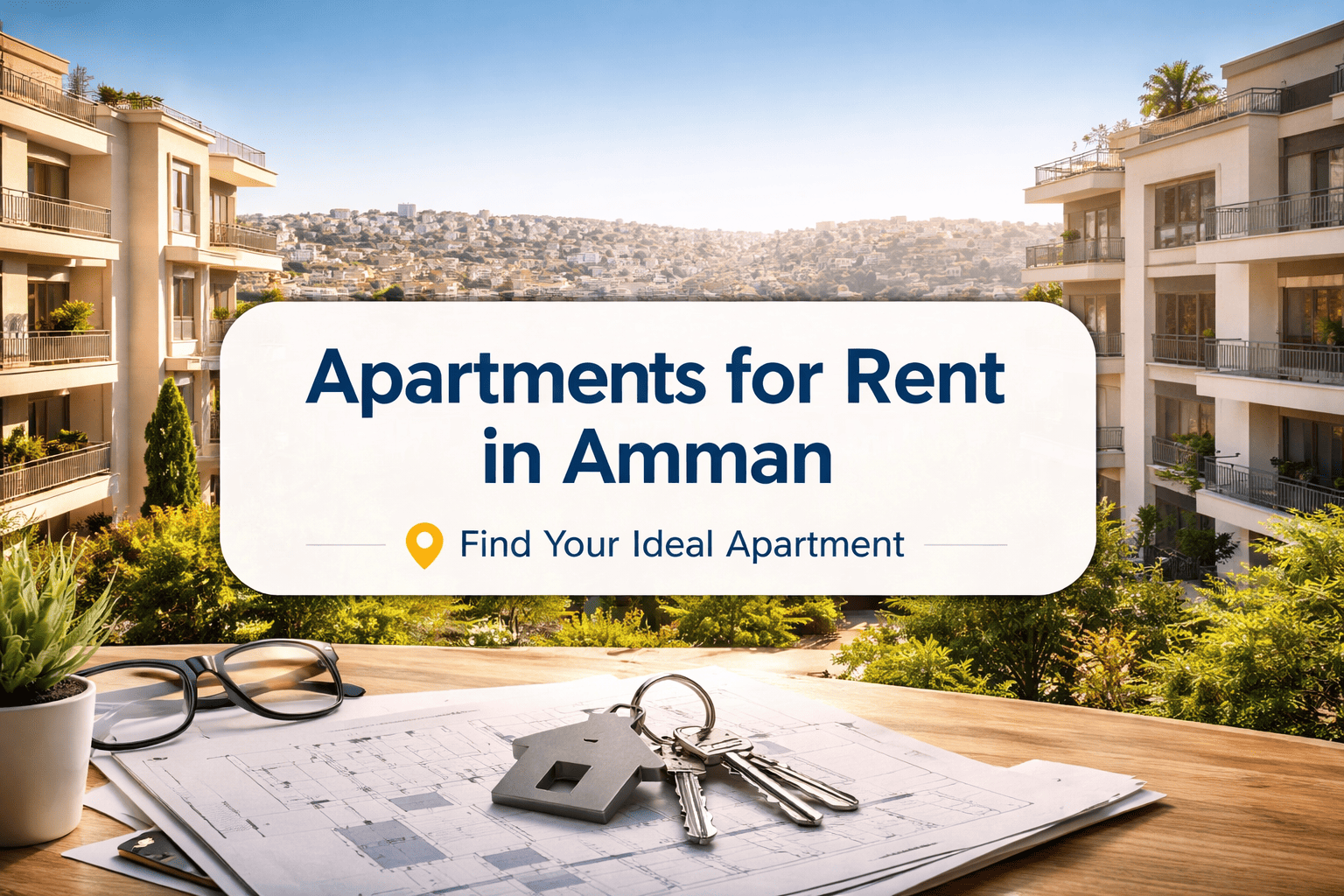

How to Find the Right Apartments for Rent in Amman

Searching for an apartment in Amman can take longer than many people expect. The city has a large number of residential buildings, but the quality, pricing, and management standards vary significantly from one neighborhood to another. Two apartments with the same size may feel completely different depending on the building condition, the surrounding streets, or how the property is maintained.
People moving to Amman for work, study, or relocation often focus on the apartment itself, but daily living in the city is shaped by several other factors. Traffic conditions, water supply schedules, winter heating systems, and parking availability all play an important role in determining whether a property will remain comfortable over time. Understanding these practical aspects of the rental market helps renters avoid many of the problems that appear only after moving in.
Understanding How Apartment Rentals Work in Amman
The rental system in Jordan is different from what many newcomers are used to. In many countries rent is paid monthly, but in Amman it is common for landlords to request a series of post-dated checks covering the full year of rent.
A typical lease is signed for twelve months. Instead of transferring rent each month, tenants usually provide several checks dated for future months. Some landlords request quarterly payments while others divide the rent into six or even twelve checks. The arrangement depends on the agreement between the tenant and the property owner.
A security deposit equivalent to one month’s rent is normally required. If a real estate agent is involved in the rental process, their commission is often similar to one month’s rent as well. These costs should be considered when preparing a housing budget.
Another point that surprises many renters is that utilities are usually not included in the rental price. Electricity, water, and internet services are paid separately by the tenant.
How Rental Prices Vary Across the City
Apartment prices in Amman depend heavily on location. Some districts contain modern apartment buildings with underground parking and elevators, while others consist of older residential blocks that were constructed several decades ago.
Smaller studio apartments often start around two hundred twenty Jordanian dinars per month in outer residential areas. One-bedroom apartments usually fall between three hundred and five hundred fifty dinars depending on the district and building quality. Two-bedroom apartments frequently range from four hundred fifty to seven hundred fifty dinars, while larger family apartments may exceed one thousand dinars in high-end neighborhoods.
Apartments in central and upscale areas tend to command higher prices. However, older buildings in established neighborhoods sometimes provide more spacious layouts than newer developments.
Choosing the Right Neighborhood in Amman
Location has a strong influence on daily comfort. Traffic patterns, grocery stores, schools, and parking conditions vary across the city, and choosing the right district can significantly affect daily routines.
Abdoun is widely considered one of the most prestigious residential districts in the capital. Many diplomatic residences and international offices operate in this area, which contributes to its reputation for quiet streets and well-maintained buildings. Apartments in Abdoun are typically larger and newer, but the higher level of comfort is reflected in the rental prices.
Sweifieh has a different atmosphere. The district contains shopping centers, offices, and restaurants, which means residents have easy access to services and entertainment. For professionals working nearby, living in Sweifieh can reduce commuting time. However, the busy commercial environment means traffic can become heavy during evenings.
Jabal Amman is one of the oldest areas of the city and has a distinctive character. Many buildings date back several decades and feature larger rooms, high ceilings, and traditional architectural elements. The district surrounds Rainbow Street, a well-known cultural area filled with cafés and restaurants. Because the buildings vary greatly in age and renovation quality, inspecting the property carefully is especially important here.
Jabal Al-Weibdeh offers a quieter environment while remaining close to the city center. The neighborhood is known for art galleries, independent cafés, and residential streets that feel more relaxed than larger commercial districts. Many expatriates choose Weibdeh because it combines central access with a calmer atmosphere.
Furnished and Unfurnished Apartments
Most apartments in Amman fall into two categories: furnished and unfurnished.
Furnished apartments include essential household furniture and appliances such as beds, sofas, kitchen equipment, and washing machines. These properties are commonly rented by people who expect to stay in Amman for a limited period, such as visiting professionals or international students. Because they are ready to move into, furnished apartments usually cost noticeably more than unfurnished units.
Unfurnished apartments provide the structural features of the home but not the furniture. Kitchen cabinets, wardrobes, lighting fixtures, and bathroom fittings are normally installed, but tenants bring their own furniture and appliances. People planning to remain in Amman for several years often prefer this option because the rent is lower and the apartment can be arranged according to personal preferences.
What to Check When Visiting an Apartment
Viewing an apartment carefully is one of the most important steps in the rental process. Some issues are easy to overlook during a short visit but become significant after moving in.
Water supply is one example. In many parts of Jordan, municipal water is delivered on a weekly schedule rather than continuously. Buildings rely on rooftop storage tanks that hold water until the next supply cycle. When inspecting an apartment, it is helpful to ask about the size of the building’s water tanks and whether residents experience shortages toward the end of the week.
Heating is another factor that should not be ignored. Winters in Amman can be colder than many newcomers expect, especially during January and February. Some buildings use diesel central heating systems while others rely on electric heaters or gas heaters. Understanding how the heating system works and what it typically costs during winter months helps tenants prepare for seasonal expenses.
The overall condition of the building can reveal how well the property is managed. Clean staircases, functioning elevators, and adequate exterior lighting often indicate that the building receives regular maintenance. Conversely, poorly maintained common areas may suggest that repairs are handled slowly or inconsistently.
Parking is another practical concern. Many older residential buildings were constructed before car ownership became widespread, which means dedicated parking areas may be limited. In densely populated neighborhoods, finding street parking in the evening can become difficult. If parking is important, it is worth confirming whether the apartment includes a designated space.
Everyday Costs That Affect Housing Budgets
Rent is only one part of the monthly housing cost in Amman. Electricity, internet services, and building maintenance fees add to the overall expense of living in an apartment.
Electricity usage increases noticeably during winter when heaters are used more frequently. Internet connections are widely available and relatively affordable, but the cost should still be included in the monthly budget. Some buildings also charge small maintenance fees to cover cleaning and upkeep of shared areas.
Being aware of these expenses before signing a lease helps tenants choose an apartment that fits comfortably within their financial plans.
Questions Worth Asking Before Signing a Lease
Speaking with the landlord or property manager can provide useful information about the apartment and the building. Tenants often ask who is responsible for repairs if appliances break down or if plumbing issues appear. It is also worth clarifying whether maintenance costs are included in the rent or charged separately.
Other useful topics include elevator servicing schedules, parking arrangements, and any building rules that affect daily living. These conversations often reveal how responsive the landlord is when issues arise.
Mistakes That Many First-Time Renters Make
Many renters who are new to Amman encounter problems that could have been avoided with a little extra research. One of the most common mistakes is choosing an apartment based solely on photographs without visiting the area during different times of day. Traffic patterns and street activity can change significantly between afternoon and evening hours.
Another common issue is overlooking heating costs during winter. Apartments that seem affordable during summer may become expensive to heat when temperatures drop. Parking limitations are also sometimes discovered only after tenants move in.
Taking time to visit several apartments and speak with current residents of the building often provides a clearer picture of what daily life will be like.
The apartment market in Amman offers a wide range of housing options across many neighborhoods. From compact studios to large family apartments, the variety of properties allows renters to find homes that match different budgets and lifestyles.
Choosing the right apartment usually involves more than comparing rental prices. Location, building maintenance, heating systems, water storage capacity, and parking conditions all influence how comfortable an apartment will be over time. By carefully evaluating these factors and visiting several properties before signing a lease, renters can make a more informed decision and settle into a home that suits their daily life in Amman.
Also Read: Cost of Living in Amman 2026: Rent, Utilities, Food & Monthly Budget Guide
News insight
 Oct 16, 2026
 How to Rent an Apartment in Amman as a Foreigner
Renting in Amman as a foreigner? Check rental documents, lease terms, deposits, payment schedules, a...
 Aug 28, 2026
 Apartments for Rent in Amman Near Shopping Malls
Apartments for rent in Amman near Abdali Mall, Taj Mall, Galleria Mall, Mecca Mall and City Mall. Co...
 Aug 21, 2026
 Apartments for Rent in Amman Near International Schools
Apartments for rent in Amman near international schools in Khalda, Dabouq and nearby areas. Compare...