

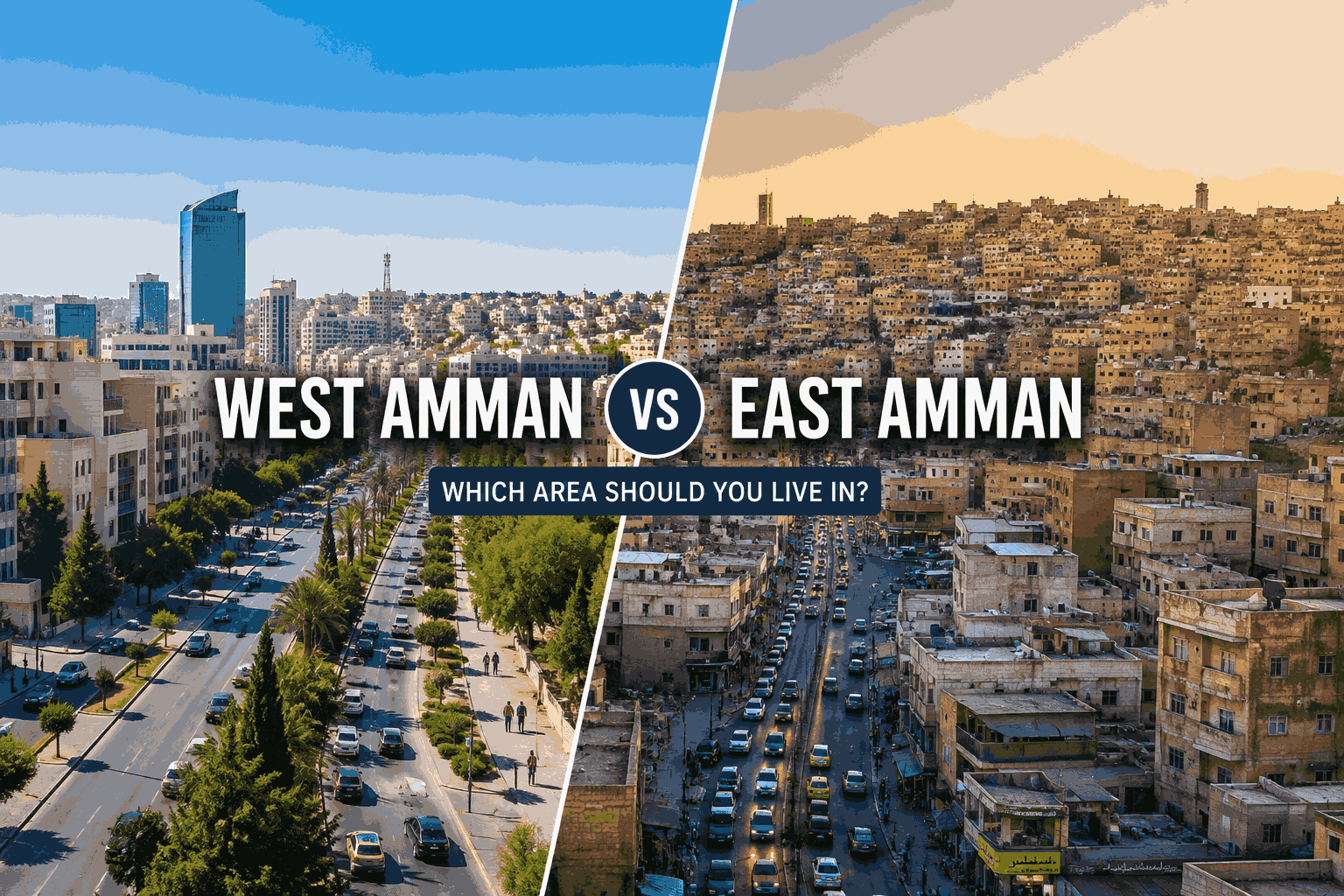

West Amman vs East Amman: Which Area Should You Live In?

Ask someone who has lived in Amman for years where you should rent an apartment, and one question usually comes up before any neighborhood is mentioned.
"Are you looking in West Amman or East Amman?"
If you're new to the city, that can be confusing.
Amman isn't officially divided into two separate cities, and there isn't a boundary that marks where one side ends and the other begins. Yet locals often describe the capital this way because the two areas developed differently over time and offer noticeably different housing, neighborhoods, and day-to-day experiences.
That doesn't mean one side is better than the other.
It means they suit different needs.
Someone looking for a modern apartment close to international schools and business districts may naturally focus on West Amman. Another renter may choose East Amman because it offers larger living space within the same budget or because it's closer to work and family.
Understanding those differences before you begin viewing apartments can save time and help narrow your search.
Instead of visiting properties across the entire city, you can focus on the areas that fit your budget, your commute and the way you expect to live.
What Is the Difference Between West Amman and East Amman?
Although Amman has expanded into one large metropolitan area, the city has grown in different directions over many decades.
West Amman experienced much of its residential and commercial expansion during the second half of the twentieth century. Many of the city's newer neighborhoods, shopping centres, business districts and international schools are located here. Roads are generally wider, apartment buildings tend to be newer, and many developments include features such as underground parking, elevators and modern security systems.
Neighborhoods commonly associated with West Amman include:
- Abdoun
- Sweifieh
- Deir Ghbar
- Khalda
- Dabouq
- Um Uthaina
- Shmeisani
- Jabal Amman
- Jabal Al-Weibdeh
East Amman developed earlier and remains home to some of the city's oldest residential communities. Traditional markets, long-established neighborhoods, family-owned businesses and historic commercial streets continue to play an important role in everyday life. Housing options are often more affordable, although building styles and apartment sizes vary considerably from one district to another.
It's important not to think of this as a comparison between "old" and "new."
Both sides of the city continue to grow, and each offers neighborhoods that appeal to different renters.
The better choice depends on where you work, how much you plan to spend on rent and what you expect from your neighborhood.
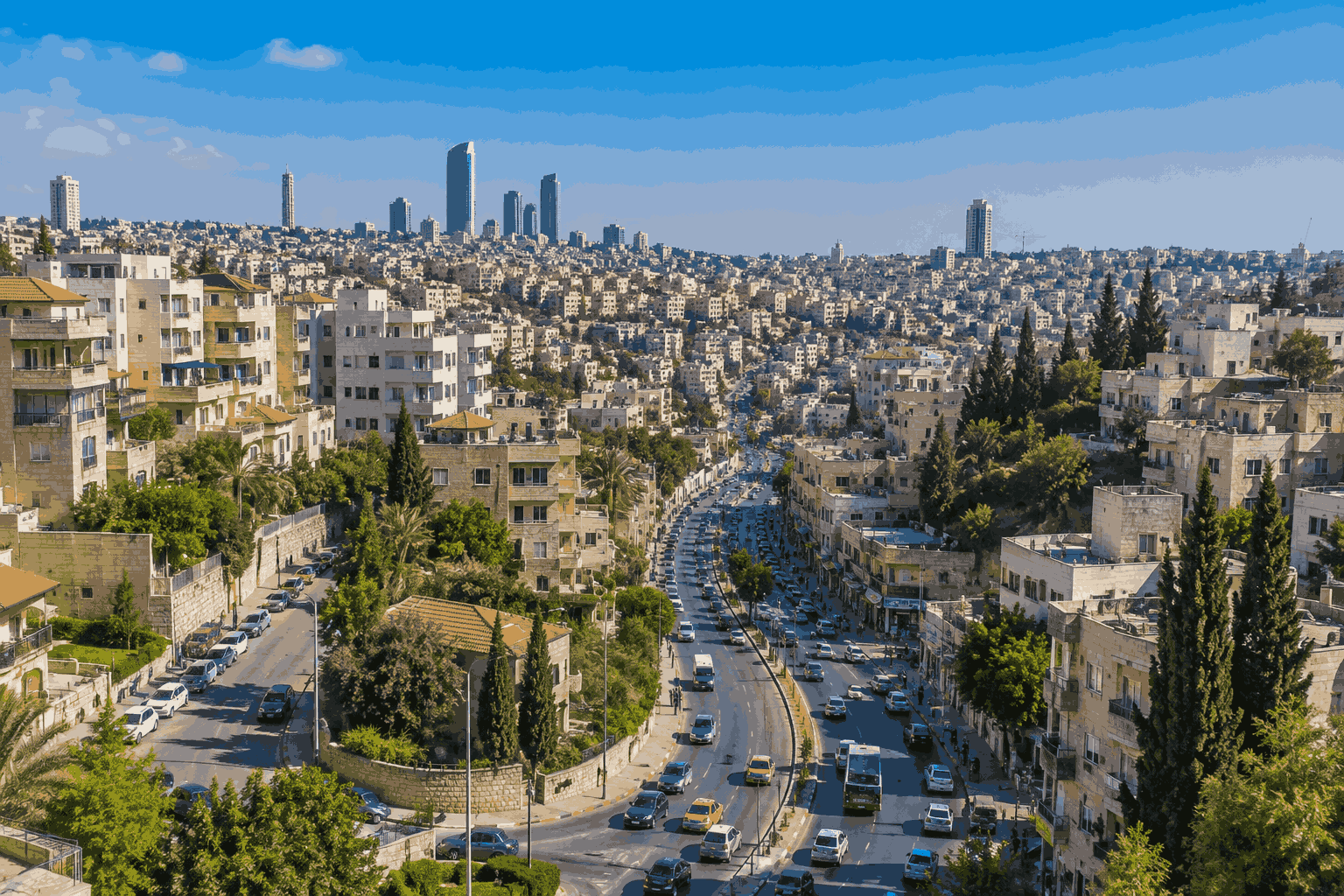
Apartment Types in West Amman and East Amman
One of the biggest differences you'll notice while browsing apartment listings is the type of housing available.
In West Amman, apartment buildings are generally newer. Many properties include modern kitchens, elevators, secure entrances, dedicated parking spaces and larger balconies. Furnished apartments are also easier to find in neighborhoods that attract expatriates and professionals.
Several residential districts have seen continuous development over the past two decades, giving renters a wider selection of newly built apartments with updated layouts and contemporary finishes.
Apartment sizes vary, but two-bedroom and three-bedroom homes are common in many family-oriented neighborhoods.
East Amman presents a different housing market.
Many apartment buildings have been part of established communities for years, and some offer noticeably larger living areas than newer developments. While luxury apartment complexes are less common, renters often find practical homes at more accessible price points.
Building design also reflects the city's history.
Instead of similar apartment blocks spread across planned residential districts, many neighborhoods include a mixture of traditional homes, mid-rise apartment buildings and locally owned residential properties that have evolved alongside the surrounding community.
If you're searching for a furnished apartment with modern amenities, West Amman generally offers more options.
If your priority is maximising living space while staying within budget, East Amman may provide opportunities worth considering.
Rental Prices in West Amman vs East Amman
Rental prices vary across every neighborhood in Amman, but location continues to be one of the biggest factors affecting monthly rent.
In general, apartments in West Amman command higher prices because of their proximity to business districts, international schools, shopping centres and newer residential developments.
Neighborhoods such as Abdoun, Dabouq and parts of Deir Ghbar are among the city's premium residential locations, while Sweifieh, Jabal Amman and Um Uthaina offer a broader mix of apartments across different price ranges.
East Amman is often chosen by renters looking for better value.
For the same monthly budget, it's sometimes possible to rent a larger apartment or secure additional living space compared with similar properties in parts of West Amman.
That doesn't automatically make East Amman the better financial choice.
Lower rent may come with a longer commute, fewer modern apartment buildings or different neighborhood amenities, depending on where you choose to live.
Rather than comparing rent alone, it's worth considering the complete picture.
A slightly higher monthly payment may reduce commuting costs, shorten travel time to work or place everyday services much closer to home.
Looking only at the advertised rent rarely tells the full story.
The neighborhood around the apartment often has just as much influence on your monthly living costs as the apartment itself.
Daily Life in West Amman and East Amman
Choosing where to live isn't only about the apartment. It's also about what your day looks like once you've moved in.
That becomes clear after a few weeks of living in Amman.
The café where you stop for coffee, the supermarket you visit every few days, the time it takes to reach work, and whether you can finish most errands without driving across the city all become part of your routine.
West Amman and East Amman offer different experiences in that respect.
In many parts of West Amman, daily life revolves around modern residential neighborhoods with easy access to shopping centres, supermarkets, restaurants, fitness centres and healthcare facilities. Areas such as Abdoun, Sweifieh, Khalda and Deir Ghbar have continued to grow over the years, so many services are located close to residential buildings.
It's common for residents to complete several errands within the same neighborhood before returning home.
East Amman has a different rhythm.
Many neighborhoods have been established for decades, and local businesses remain an important part of everyday life. Traditional markets, neighbourhood grocery stores, bakeries and family-owned shops continue to serve local communities. Rather than large shopping malls, many residents rely on businesses that have operated in the same streets for years.
Neither way of living is better.
Some people prefer modern retail centres and wider roads, while others enjoy neighbourhoods where long-established businesses remain part of everyday life.
The right choice depends on what feels more practical for your lifestyle.
Shopping, Restaurants and Entertainment
One of the biggest differences between the two sides of the city is where people spend their free time.
West Amman is home to many of the city's shopping malls, international restaurants, cafés and entertainment venues. Areas such as Sweifieh, Abdoun and Jabal Amman attract residents from across the capital throughout the week, particularly during evenings and weekends.
Whether you're meeting friends for dinner, visiting a shopping centre or spending time at a café, you'll find plenty of options within a relatively short distance.
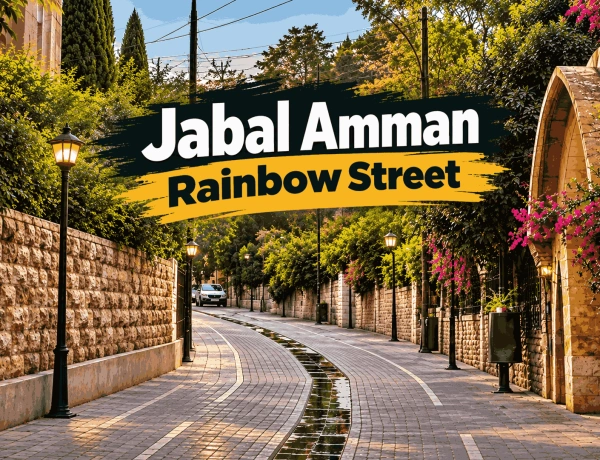
Jabal Amman also offers a different experience through Rainbow Street, where cafés, restaurants and historic buildings attract both residents and visitors.
East Amman focuses less on modern entertainment districts and more on traditional commercial streets.
Markets selling fresh produce, clothing, household goods and local food continue to play an important role in daily life. These neighbourhoods provide a different shopping experience, particularly for residents who prefer local businesses over larger retail centres.
If shopping malls and international brands are high on your priority list, you'll generally find more choice in West Amman.
If you're looking for traditional markets and long-established local businesses, East Amman offers a very different experience.
Schools, Hospitals and Everyday Services
Families often choose a neighborhood based on what surrounds the apartment rather than the apartment itself.
That usually means looking at schools, healthcare facilities and everyday services before arranging property viewings.
West Amman is home to many of Jordan's international schools, private hospitals and specialist medical centres. This has made neighborhoods such as Abdoun, Deir Ghbar, Dabouq and Khalda popular with families planning to stay in the city for several years.
Access to supermarkets, pharmacies, banks and fitness centres is also straightforward in most residential districts.
East Amman also has a wide network of schools, hospitals and public services serving long-established communities throughout the city.
The difference is less about availability and more about the type of facilities found in each area.
Families relocating from abroad often begin their apartment search in West Amman because many international schools are located there, while residents with existing family or work connections in East Amman may naturally prefer to stay closer to those communities.
Getting Around West Amman and East Amman
No matter where you rent an apartment, traffic will eventually become part of your routine.
The difference is how much time you spend in it.
Living closer to your workplace often has a greater impact on daily life than choosing a neighbourhood with slightly lower rent.
Someone working in Abdali, for example, may prefer Jabal Amman, Shmeisani or Um Uthaina because of their convenient location. A family with children attending school in West Amman may decide that living nearby is more practical than commuting across the city every morning.
Major roads connect both sides of Amman, but travel times change considerably during peak hours.
For that reason, many experienced renters recommend testing the journey between a potential apartment and your workplace before signing a lease.
An apartment that seems ideal during a weekend viewing can feel very different once weekday traffic becomes part of everyday life.
Choosing a location that reduces your daily travel often improves your quality of life more than choosing an apartment with an extra room or slightly lower monthly rent.
Which Area Is Better for Families?
Families looking for an apartment in Amman often start with the same priorities: a safe residential environment, good schools, practical layouts and services that make everyday life easier.
Many of those requirements are easier to find in parts of West Amman.
Neighborhoods such as Abdoun, Deir Ghbar, Khalda and Dabouq are popular because they offer larger apartments, quieter residential streets and convenient access to international schools, supermarkets, healthcare facilities and recreational spaces. Many apartment buildings also include private parking and modern amenities, which are important for families with young children.
That doesn't mean East Amman isn't suitable for family life.
Many long-established communities have lived there for generations, and the area continues to provide affordable housing with easy access to local schools, markets and public services.
The choice often comes down to budget, school location and daily travel rather than one side of the city being universally better.
Which Area Is Better for Expats?
Many expatriates moving to Amman begin their apartment search in West Amman.
One reason is convenience.
Several embassies, international schools, multinational companies and serviced apartments are located in this part of the city. English is also widely spoken in many businesses, restaurants and residential communities, making the transition easier for newcomers.
Neighborhoods such as Jabal Amman, Abdoun, Sweifieh and Deir Ghbar regularly attract diplomats, international professionals and remote workers because they combine modern housing with easy access to cafés, restaurants and business districts.
East Amman offers a different experience.
It provides a closer look at everyday local life, with traditional markets, established neighbourhoods and a stronger connection to the city's history. Expats who prefer a more local living experience sometimes choose these areas, particularly if their workplace or personal connections are nearby.
Which Area Is Better for Students?
Students usually have different priorities from families or professionals.
Rent, commuting time and access to universities often have a greater influence than luxury finishes or premium locations.
Several universities are easier to reach from parts of West Amman, making neighbourhoods such as Khalda and nearby districts popular among students and academic staff.
Others choose East Amman because rental costs may be lower, allowing them to rent a larger apartment or share accommodation while staying within budget.
Before renting, it's worth calculating both housing costs and daily transport expenses.
A lower monthly rent may not always save money if long commutes become part of your routine.
Which Area Offers Better Value for Rent?
Many renters assume lower rent automatically means better value.
In practice, that's not always true.
Value depends on what you're getting in return.
An apartment in West Amman may cost more each month, but it could also reduce commuting time, provide dedicated parking, include modern building facilities and place supermarkets, healthcare services and restaurants within a short distance.
An apartment in East Amman may offer significantly more living space for the same budget while providing access to long-established local communities and everyday services.
Rather than asking which side of the city is cheaper, it's often more useful to ask which apartment gives you the best balance between cost, location and convenience.
That's the comparison that usually matters most after you've moved in.
Common Mistakes When Choosing Between West Amman and East Amman
Apartment listings only tell part of the story.
Before signing a lease, it's worth spending time in the neighbourhood itself.
Visit during both weekdays and weekends.
Drive the route to work during normal commuting hours rather than relying on navigation apps outside peak traffic.
Check where the nearest supermarket, pharmacy and bakery are located.
If you own a car, confirm that the apartment includes dedicated parking instead of assuming street parking will always be available.
If you're renting a furnished apartment, ask exactly what furniture and appliances are included before signing the agreement.
Small details like these often have a greater impact on daily life than an upgraded kitchen or a larger balcony.
Where do you see yourself living every day?
If your priorities are modern apartments, international schools and shorter commutes to business districts, you'll probably spend more time looking at neighborhoods in West Amman.
If you're looking for more space within your budget or want to stay closer to long-established communities and traditional commercial areas, East Amman deserves equal consideration.
Before making a decision, visit more than one neighborhood. An apartment may impress you during a viewing, but it's the streets outside the building that will shape your experience long after moving day.
Also Read: Best Neighborhoods to Rent an Apartment in Amman (2026)
News insight
 Oct 09, 2026
 Where to Live in Amman, Jordan: Weibdeh, Jabal Amman and Abdoun
Explore life in Jabal Al Weibdeh, Jabal Amman, and Abdoun, from traditional stone homes and café str...
 Oct 02, 2026
 Is 6th Circle a Good Place to Live in Amman?
Is 6th Circle right for your next apartment in Amman? Compare rent, traffic, nearby areas, restauran...
 Sep 25, 2026
 Rainbow Street Amman: The Old Heart of Jabal Amman
Rainbow Street Amman runs through historic Jabal Amman, with old stone houses, cafés, galleries, hil...